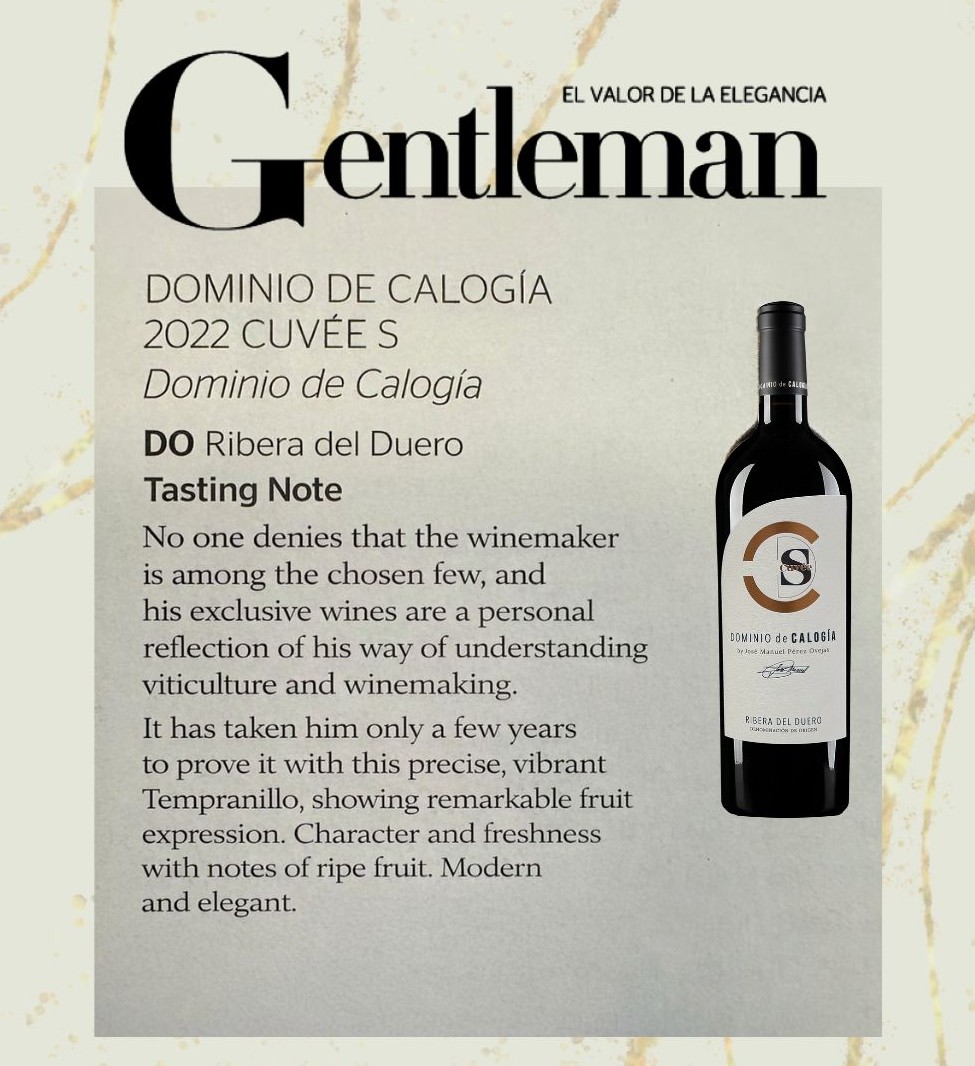
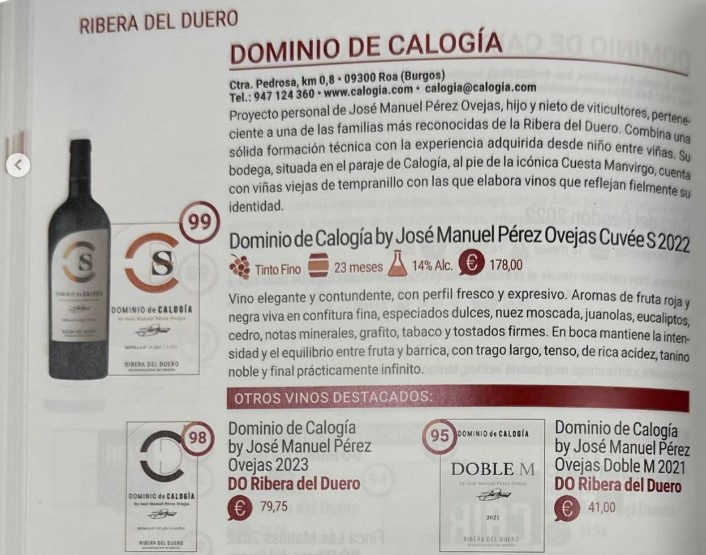
In its latest issue, corresponding to the month of March, the influential journalist Mª Pilar Molestina includes Dominio de Calogía Cuvée ‘S’ 2022 among the country’s great wines. We attach her description below.
Without a doubt, this is wonderful news that encourages us to continue deepening our philosophy: to craft wines with a unique character and identity, a true reflection of the way we understand viticulture and winemaking.
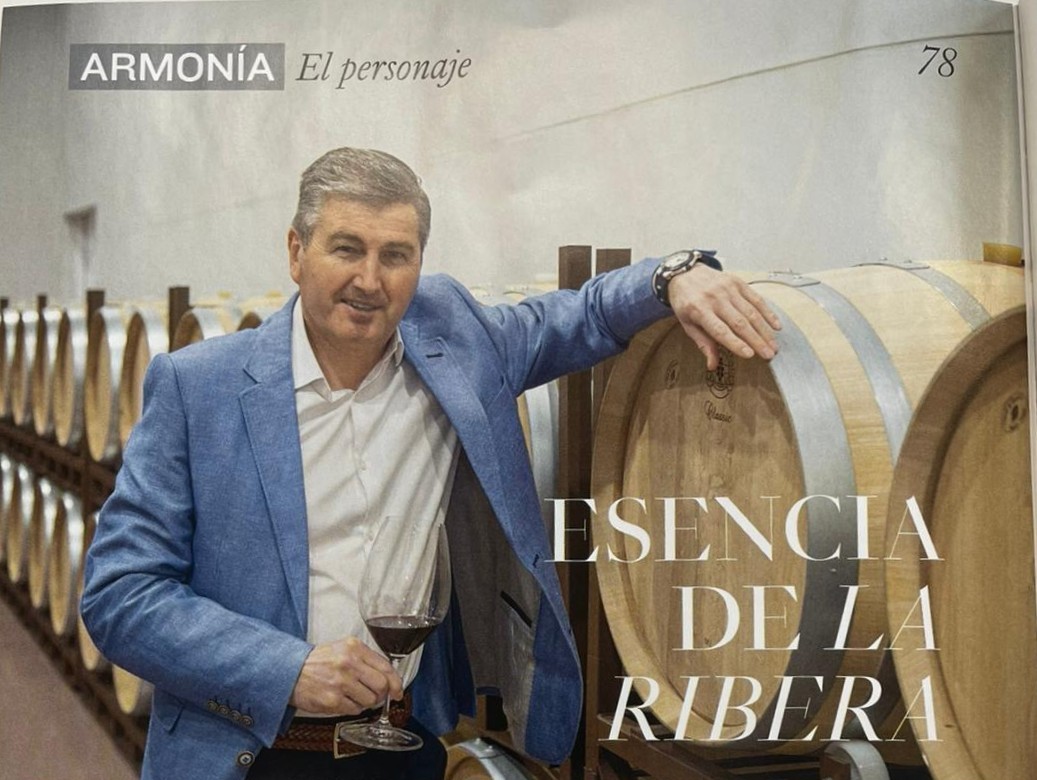
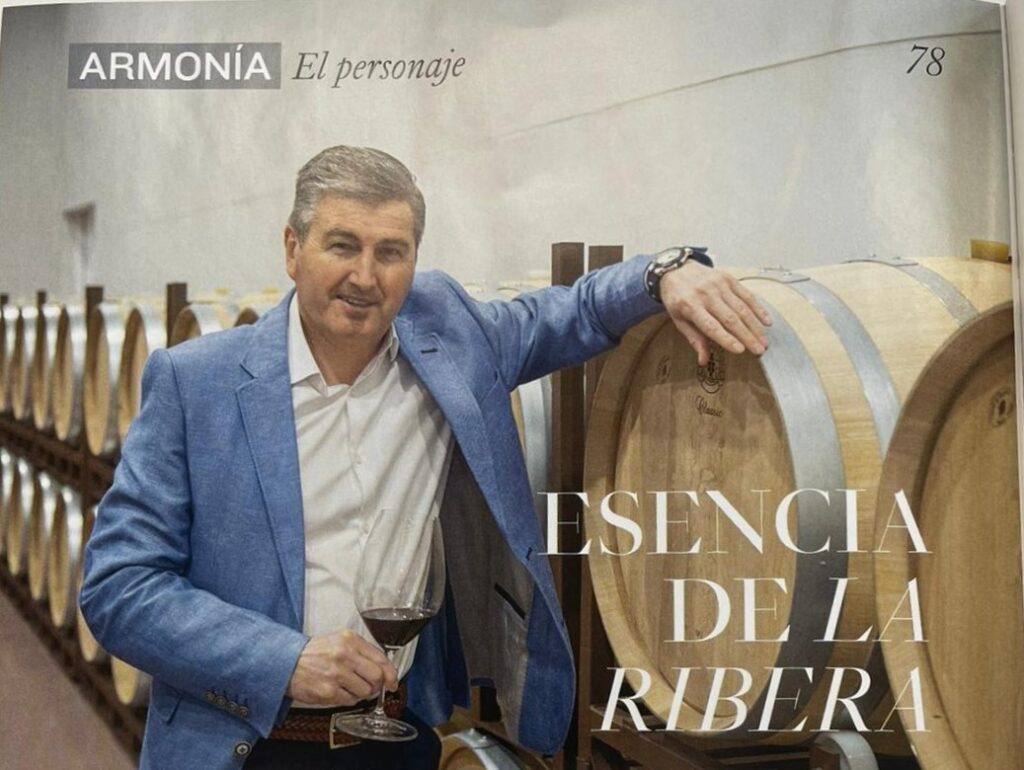
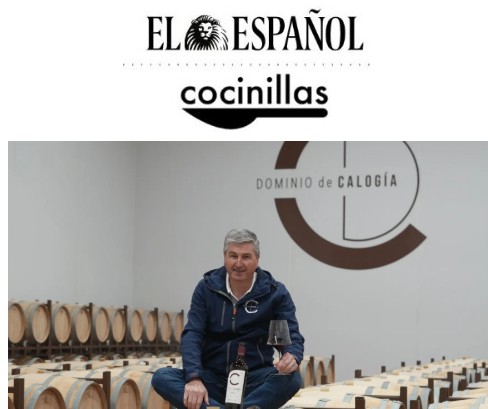
He has just returned from Valencia, where he received an award as Winemaker of the Year for his Calogía Cuvée S. He also won it in 2023 and 2018, one year after being named Winemaker of the Year. “What I value most is that people choose my wines,” he acknowledges. Precision, respect for the land, and dedication to quality sum up Pérez Ovejas’ project.
How was your 36th harvest? It began on September 22, one of the earliest I can remember. Ripening was advanced: there were heavy rains in winter and spring, and a very dry summer. We lost 20% of production due to mildew (a fungus), but quality was not affected. These years demand precise decisions.
What did people at home say when you decided to create a winery after turning 50? It was a challenge, but my family supported me. Silvia, my wife, was clear that with our own vineyards and a manageable scale, the project would have clarity and credibility. I wanted to make wines with identity, far removed from traditional rigidity.
How has the project evolved since 2019? The reception was swift. From the very beginning, the market trusted us. To achieve this, we take care of every detail: hand selection, demanding protocols, and cold maceration to obtain very fine tannins.
“Only 3,000 bottles of Cuvée S are produced: one per vine, which represents one and a half kilos per plant.”
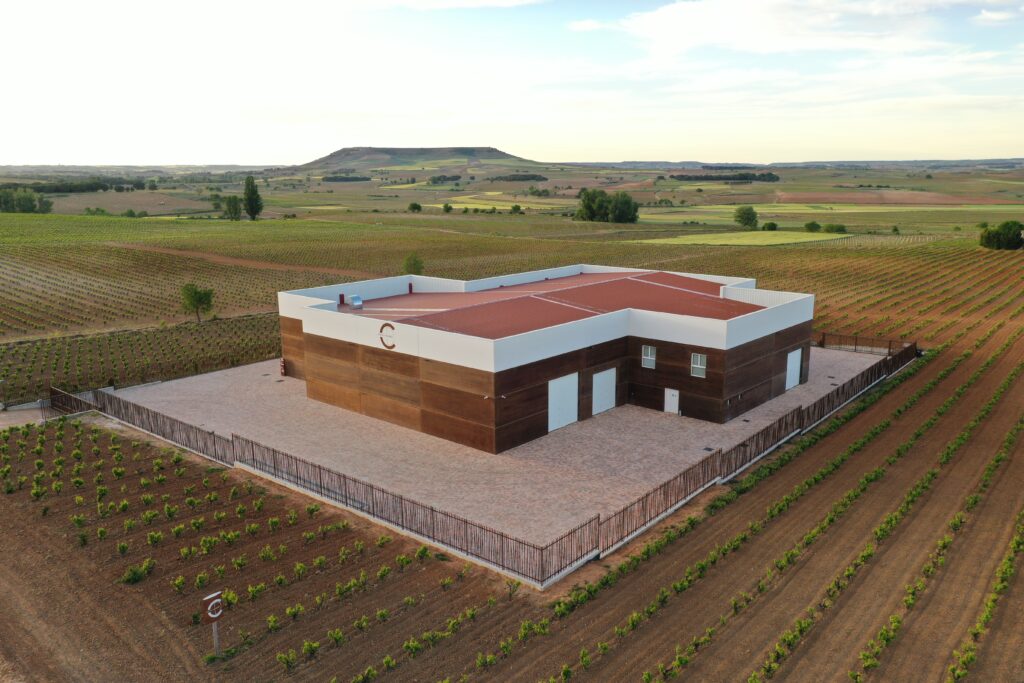
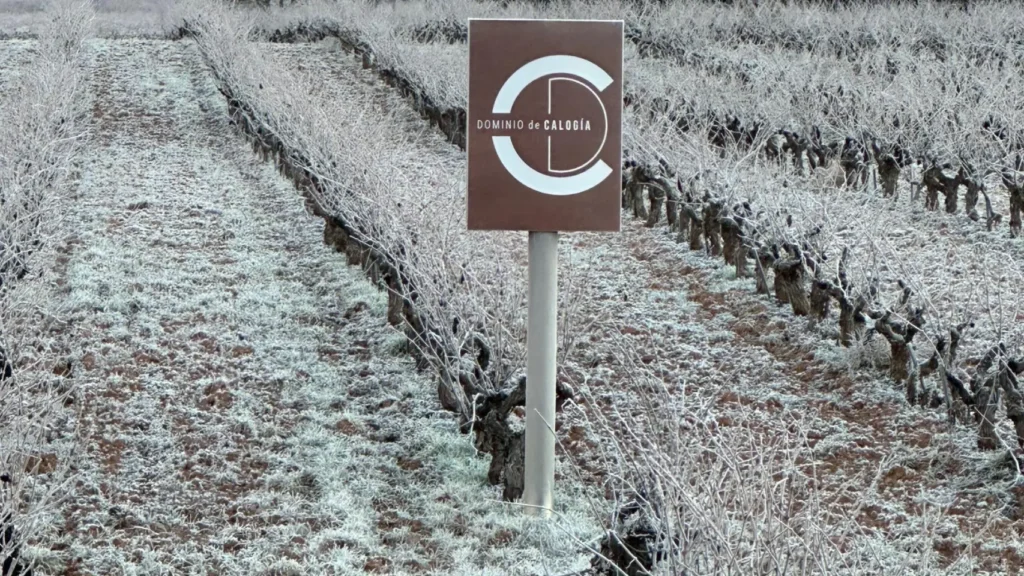
All the vineyards are located at altitude, between 820 and 850 meters. In the background, presiding over the landscape, is the silhouette of the iconic Cuesta Manvirgo, near Roa and Pedrosa de Duero.
How do you manage production and the market? Across the three references, we produce around 50,000 bottles per year. We prioritize the international market, which represents 30%. In Spain, we are increasingly present in specialty shops and restaurants.
Do you work with parcel-by-parcel vinification? Yes. Each plot is vinified separately. Basically, there are three vineyards: Doble M comes from La Loma, in Roa. Dominio de Calogía, as such, is made from vineyards bordering the winery. Cuvée S comes from a small parcel in Pedrosa, one and a half hectares. Only 3,000 bottles are produced—one per vine, which represents one and a half kilos per plant.
How do you manage the use of oak? We work with 314 French oak barrels and renew one third every year. I seek balance: the wood should never dominate the wine.
Have you ever thought about experimenting with varieties other than Tinta Fina? No. It would distort the style. I want to remain faithful to Calogía’s identity.
What is your first memory of the vineyard as something of your own? When my father allowed me to manage my first plot (vineyard) in Ribera del Duero. I was about 14 years old. Today that vineyard continues to supply grapes for Calogía and, fortunately, I still count on my father—his support and trust.
What do you open a bottle of Calogía with? With simplicity: a fried egg, potatoes, good ham, and aged cheese. In addition to meat, it pairs well with hake or wild turbot. Some restaurants specializing in fish even offer Calogía on their wine lists.
How is the third generation coming along? I would like my children to join after completing their studies and working elsewhere. It would be ideal to maintain the family character. Manuela studies Business Administration and Advertising, and Mauro studies Oenology.
Will there be more Calogía labels? No. The goal is to maintain the philosophy and produce wines that belong to the Spanish and global elite.
There is something that has turned the wines from this winery into sought-after companions to bid farewell to 2025. These days, radio stations, magazines, and awards insist on it, considering one of its reds, Dominio de Calogía Cuvée S 2021, the best of the year. And its creator, once again, the best winemaker in this country.
It is possible that the halo surrounding the project has its origin in the unquestionable quality of its first three vintages: 2019, 2020, and 2021. The real test came twelve months later with a dry, warm growing cycle that could only be countered with experience—something the winery’s owner, José Manuel Pérez Ovejas, has in abundance, having accumulated nearly four decades crafting some of the finest Ribera del Duero wines.
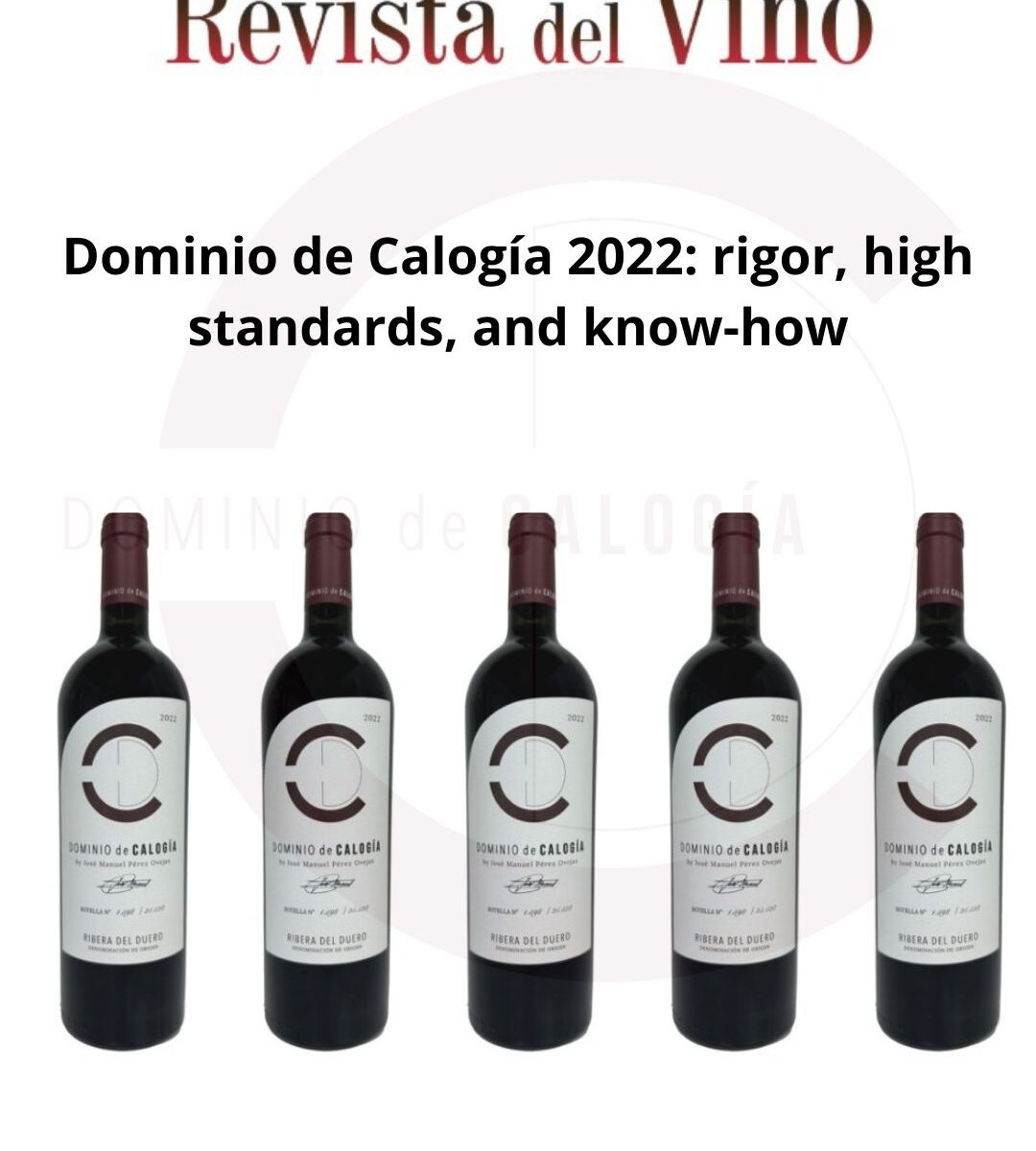
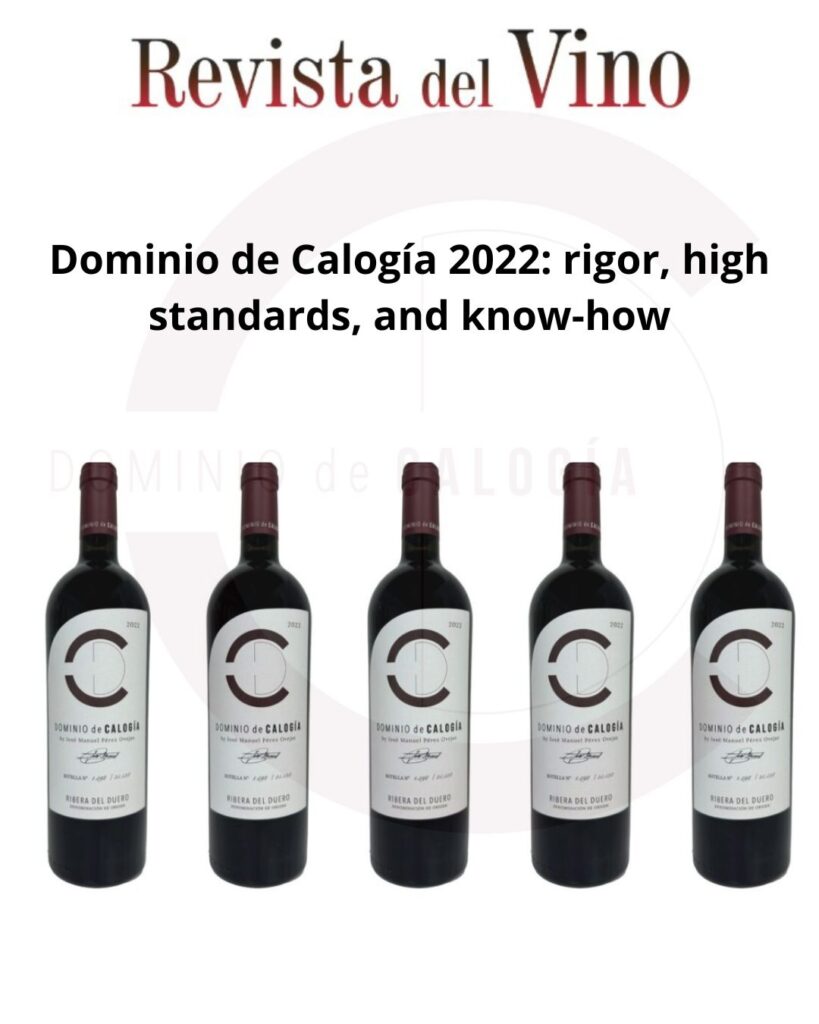
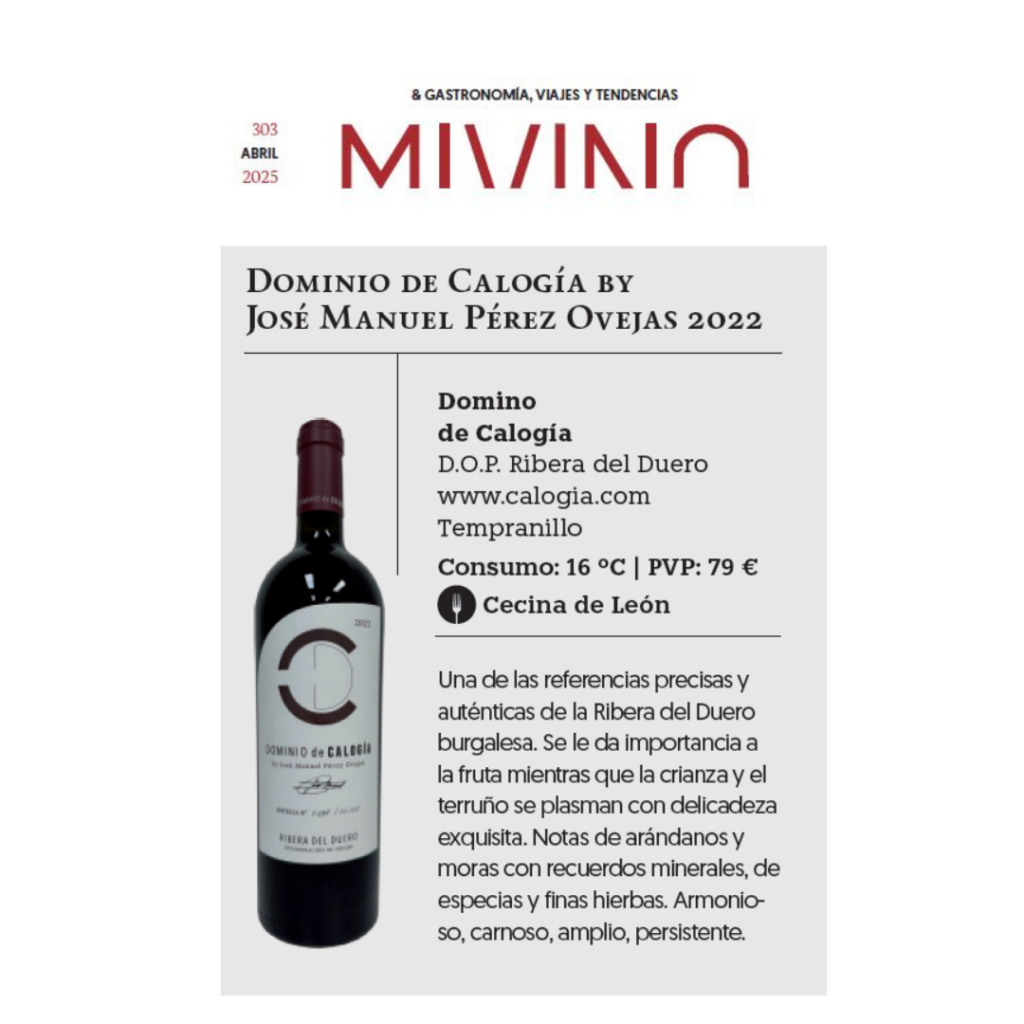
It should therefore come as no surprise that Dominio de Calogía 2022 displays deep color, intense aromas, power, and length. A complex journey that includes black fruit (blackberry), also red fruit, and notes of tobacco, caramel, coffee, and cassis. Its appealing texture—hallmark of the house—restrained imprint of oak, and pronounced freshness end up making it an especially seductive drink. The result of combining rigor, high standards, and know-how.
Winery: Dominio de Calogía Website:https://calogia.com DO: Ribera del Duero Variety: Tempranillo Alcohol: 14% RRP: €78
José Manuel Pérez Ovejas, the winemaker revolutionizing Ribera del Duero and triumphing in the wine guides
José Manuel Pérez Ovejas is at the helm of the winery Dominio de Calogía, in addition to serving as technical director of Juvé y Camps’ winery in Ribera del Duero.
José Manuel Pérez Ovejas is one of those winemakers who masters his craft like a magician. The wines that come from his hands are not only consistently among the finest produced in Spain, but they also anticipate future trends and open new paths.
Let’s start at the beginning. Pérez Ovejas is a Ribera del Duero specialist, and it runs in his blood. He was born in Pedrosa de Duero, a small village surrounded by vineyards in the Burgos area of Ribera del Duero, near Roa de Duero.
His grandfather, Mauro Pérez, owned one of the largest vineyard holdings in the village. It was the 1970s, and grape and wine prices were at rock bottom. The wine was sold to the cooperative and barely made ends meet.
Don Mauro had three sons who followed him into agriculture, starting with the eldest, Benjamín, who already had—and still has—a reputation as one of the best viticulturists in the entire region.
When the 1980s began, the outlook started to change. Interest in wine grew and prices improved. In 1980, Mauro and his sons decided to leave the cooperative and found their own winery, which they called Hermanos Pérez Pascuas.
With the help of an external consultant, they released a wine called Viña Pedrosa. Two years later, in 1982, the Ribera del Duero Denomination of Origin was officially established, with this winery as one of its founding members.
Torremilanos in Aranda, Balbás in La Horra, Ismael Arroyo in Sotillo, and several cooperatives from the Burgos area—where most of the vineyards are located—formed the founding group. They were joined by two wineries from Valladolid: Protos and Vega Sicilia.
José Manuel Pérez Ovejas is the third son of Benjamín and the only one who showed an interest in wine. Coming from a humble family, he studied at the village school and later obtained a scholarship to complete his secondary education at the Universidad Laboral de Huesca.
From Huesca he moved to Seville, where he qualified as a technical agricultural engineer; then to Madrid, to the School of Agronomy, where he specialized in viticulture and oenology; and finally he completed his oenology degree in Valladolid.
In early 1989, he returned home with his impressive qualifications. He was 24 years old and had never truly been disconnected from the family business, having taken part in harvests and all kinds of agricultural work throughout his life.
His family—his father and his two uncles—trusted him despite his youth, and he took charge of the 1989 harvest, admittedly very nervous, as he later confessed. It turned out perfectly. From that moment until 2018, he completed 29 more harvests, directing both winemaking and management.
The Pérez Pascuas winery became one of the most prestigious in Spain, and the Viña Pedrosa range turned into true icons of great Spanish wines, also achieving significant international recognition.
On March 13, 2019, news broke that shook the entire wine world, especially Ribera del Duero: José Manuel Pérez Ovejas was forced to leave the company he had led and elevated for 30 years.
Offers poured in from everywhere, but he chose to remain calm and focus on his personal project, Dominio de Calogía, which began that very same year, 2019. The project is based on 22 hectares of his own vineyards on an estate called Calogía, where he built a modern, design-driven winery. It is located on the road between Roa de Duero and Pedrosa, land and vineyards he knows intimately.
He began producing a wine called Dominio de Calogía by José Manuel Pérez Ovejas, and praise quickly followed, with success across all major wine guides. The wine, which is not inexpensive, sold out almost immediately.
In the meantime, Joan Juvé and his daughter Meritxell, who lead the powerful Catalan firm Juvé y Camps, managed to convince him to take on the technical direction—that is, the winemaking—of their new Ribera del Duero winery: Pagos de Anguix, where he is doing truly outstanding work.
In his personal project, Dominio de Calogía, he has embraced new trends that, while preserving the character and identity of Ribera del Duero that he helped define from the very beginning, move toward a lighter, more elegant style—powerful on the palate, yet velvety, with an overall sensation of freshness.
He produces three wines, all made from Tempranillo grown in Ribera del Duero:
Dominio de Calogía Cuvée 2022, a small-production wine
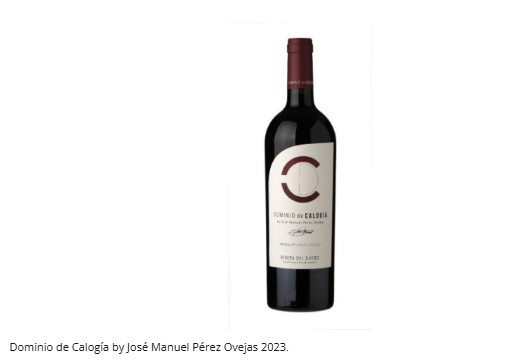
Dominio de Calogía by José Manuel Pérez Ovejas 2023
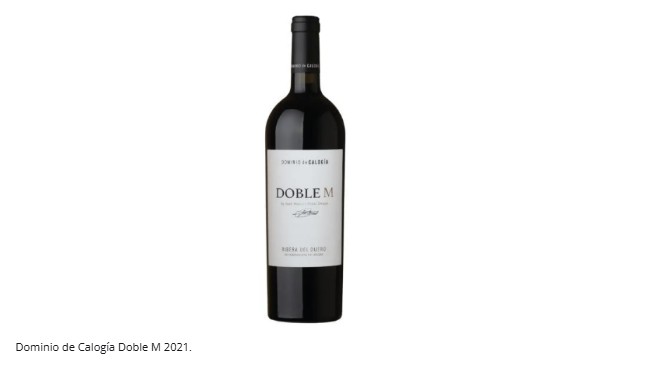
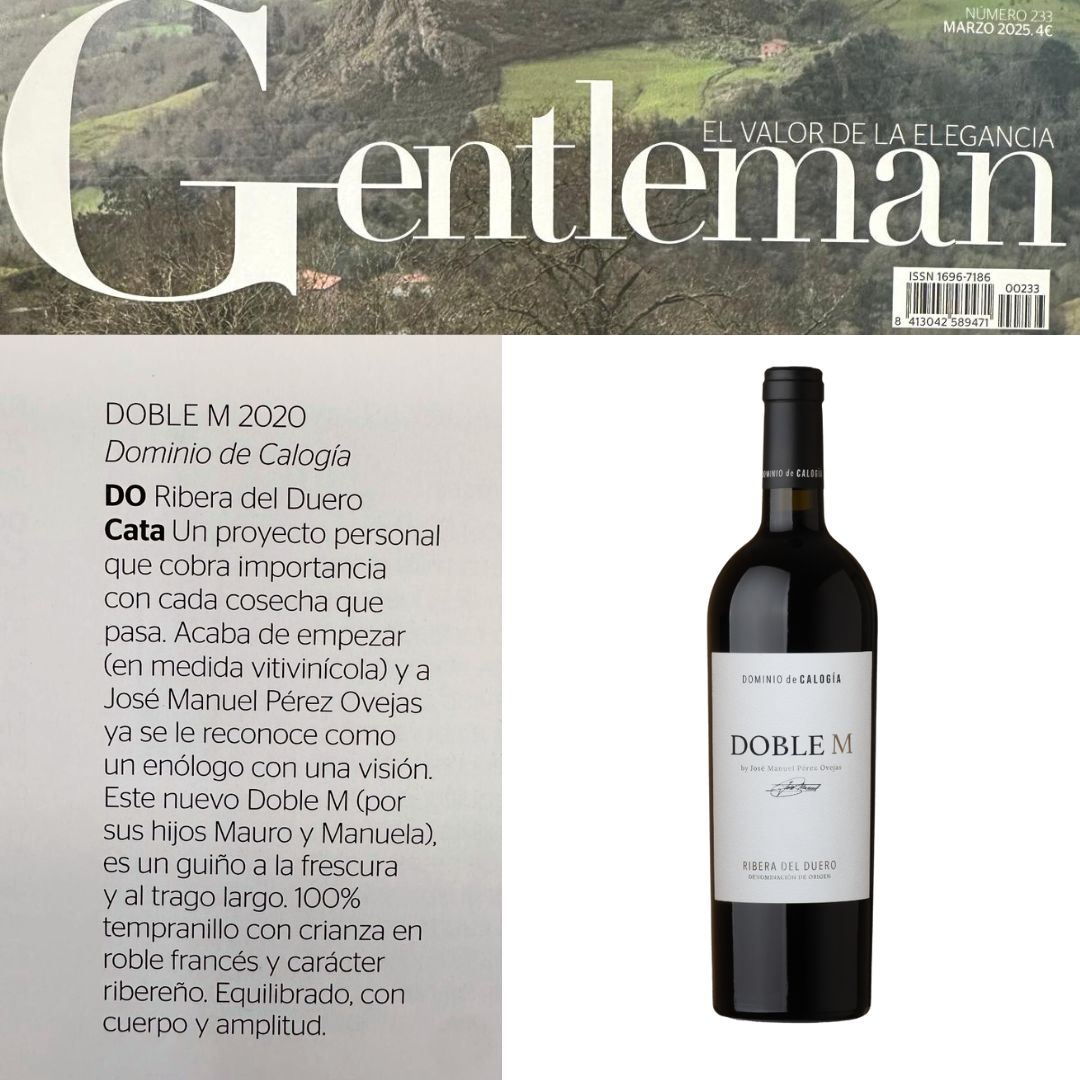
Dominio de Calogía Doble M 2021
We tasted the latter two, and they are spectacular.
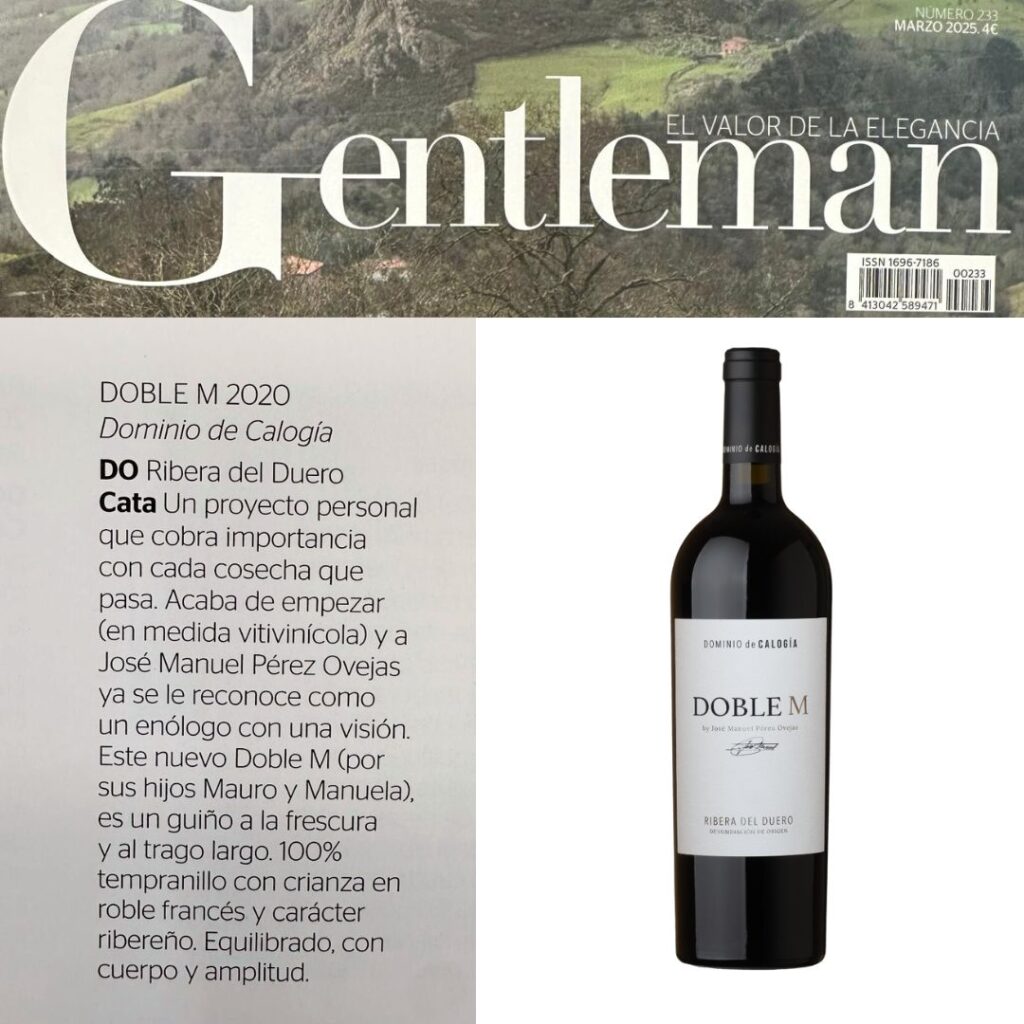
Doble M 2021, aged 15 months in oak barrels, conveys expressiveness and intensity, with a nose full of fresh fruit, floral notes, rockrose, and licorice; on the palate it is saline, with balanced, fresh acidity and a velvety texture. Retail price: €41.
Dominio de Calogía by José Manuel Pérez Ovejas 2023, aged 13 months, echoes the same freshness. It is loaded with elegance and complexity. The nose shows notes of black plums, blackberries, scrubland, and a wide range of aromas; the palate is very flavorful, long, smooth, and silky. Retail price: €80.
They say that those who know, know. This man, in 1989, together with other pioneers, helped lift the newly created Ribera del Duero Denomination of Origin to the heights. Now, 35 years later, he is leading the modern vision of this new Ribera, which continues to evolve for the better.
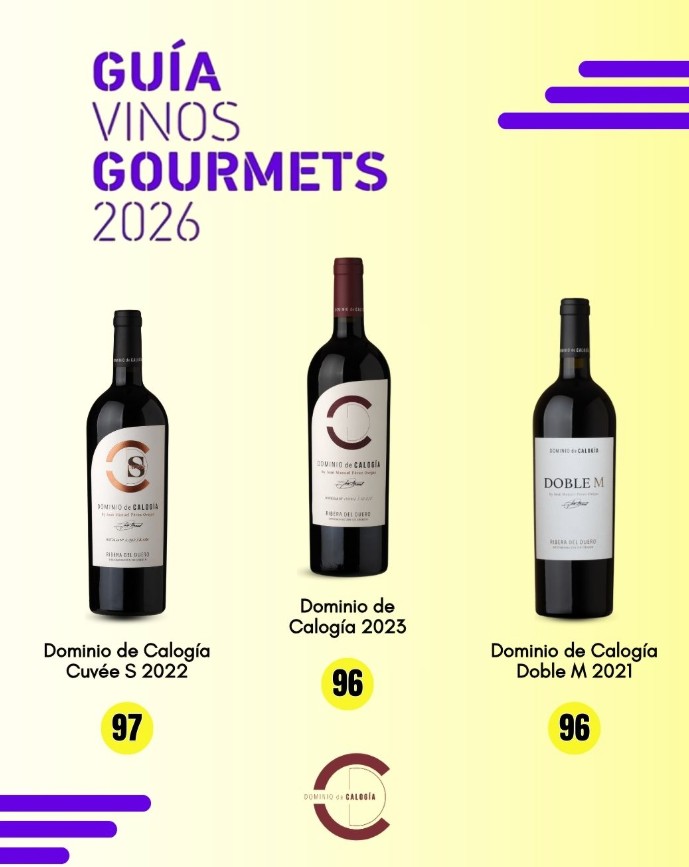
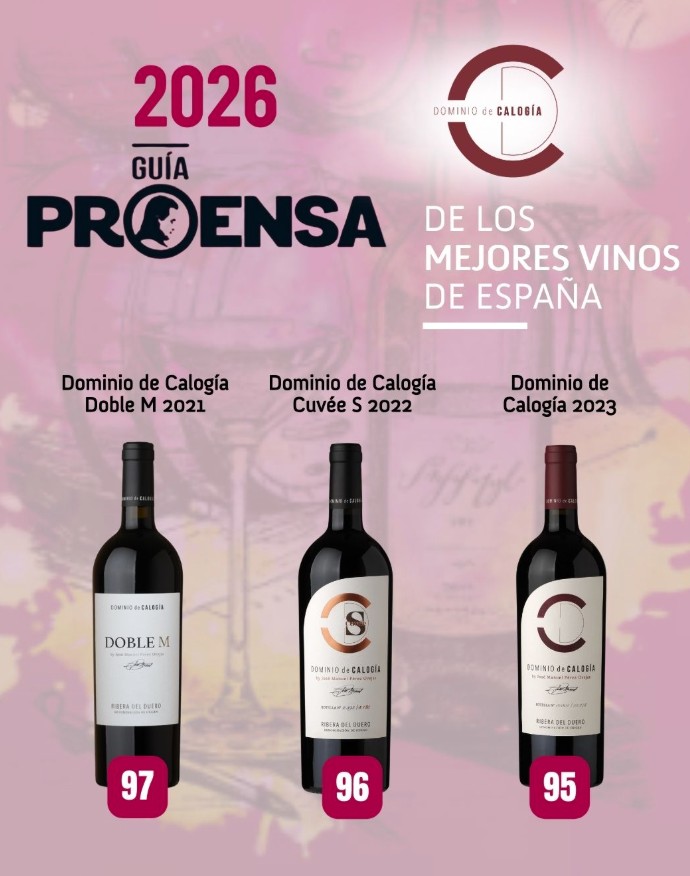
That our Cuvée S 2022 has been named among the Wines of the Year, alongside Dominio de Calogía 2023 and Doble M 2021, is a tremendous encouragement to keep working the way we know best: with rigor, patience, and respect for our land.
Thank you to all who value wine made from origin and with attention to detail. We move forward.
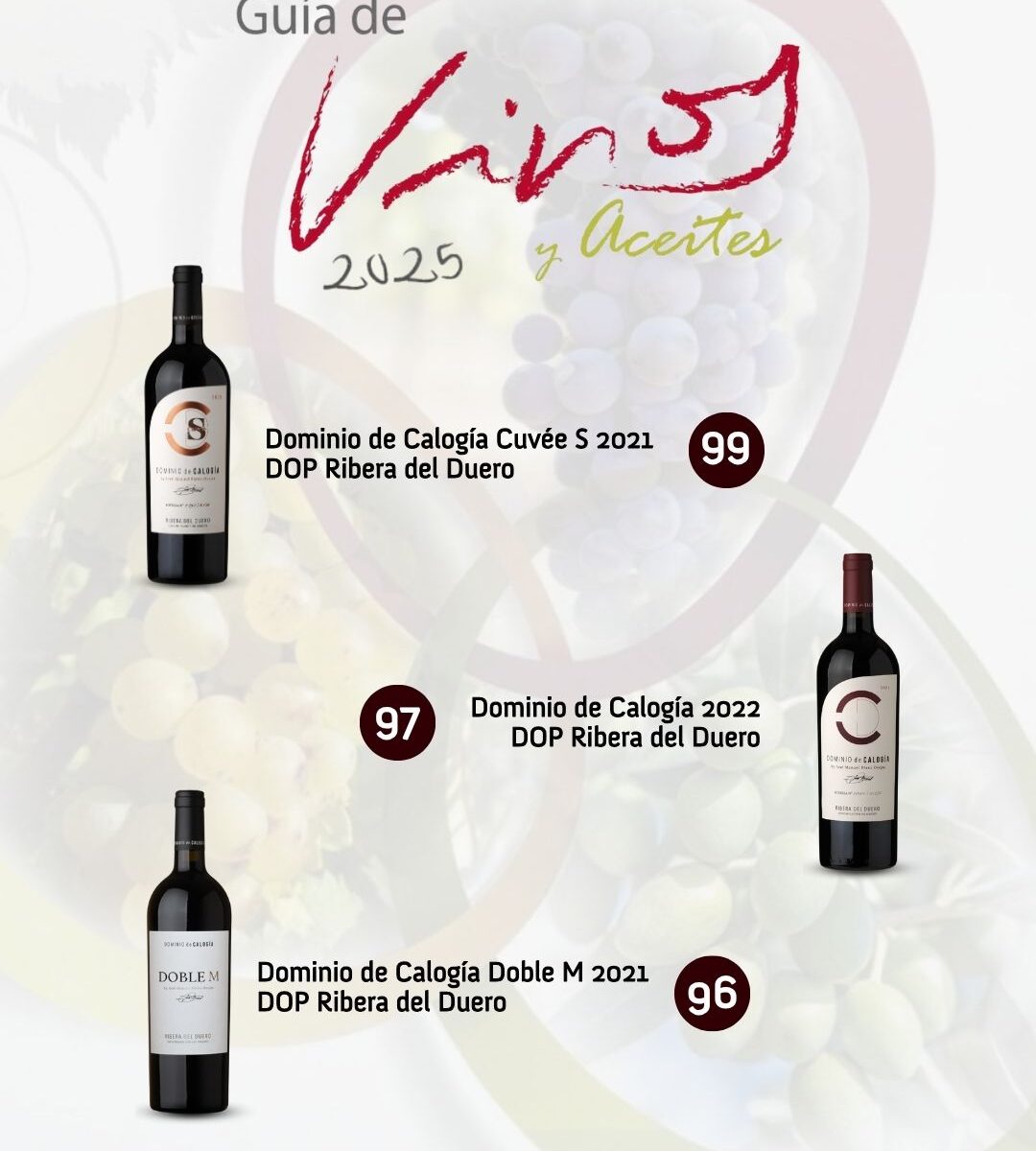
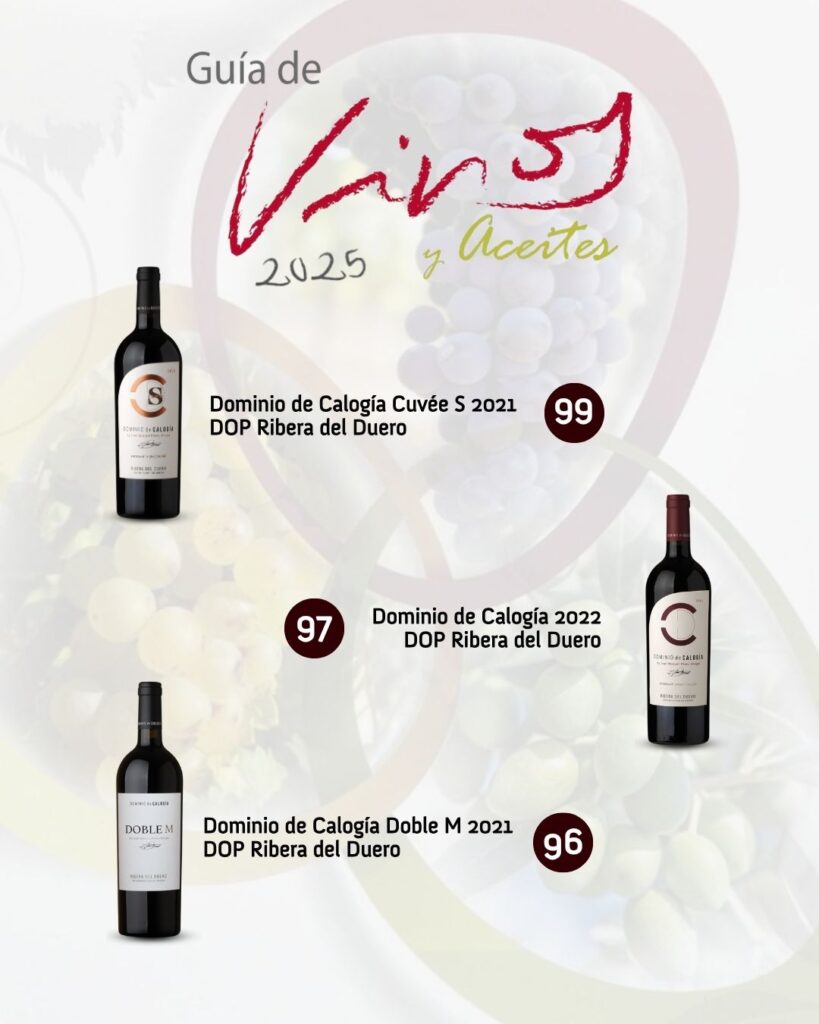
Dominio de Calogía Cuvée S 2021 has been recognized as the Best Red Wine of Spain in the 2025 Guide to the Best Wines and Olive Oils by SeVi, receiving a score of 99 points. Vega Sicilia 2016 and Tío Pepe Cuatro Palmas achieved the same rating.
In addition, Dominio de Calogía 2022 received 97 points, and Dominio de Calogía Doble M 2021 reached 96 points, placing them among the top-rated wines in the publication.
We are very pleased with these scores in such a prestigious guide. These recognitions reaffirm our commitment to quality, dedication to the terroir, and love for wine.
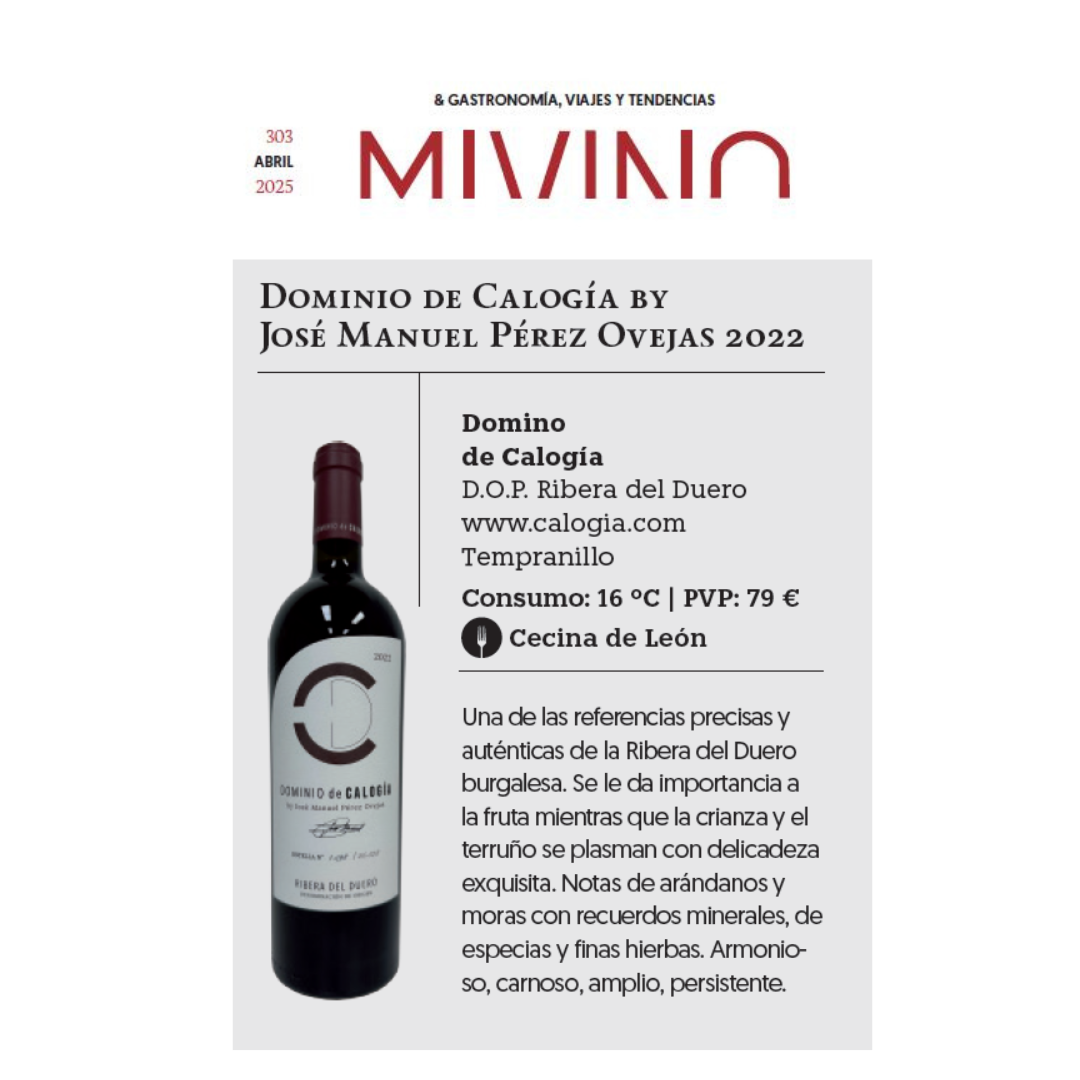
We are pleased to announce that our Dominio de Calogía 2022 has been highlighted as one of the standout wines in the special feature on Ribera del Duero published by Mi Vino magazine in its April issue. We attach the description.